CT to Text: A Newly Published Release
We’ve just published an exciting new release of our CT to Text workflow. This release demonstrates how raw data from MorphoSource CT scans can be transformed into readable scientific summaries. By pulling in fresh metadata, the workflow automatically generates multi-paragraph narratives, highlighting each specimen’s taxonomy and morphological significance.
Screenshot of the Release
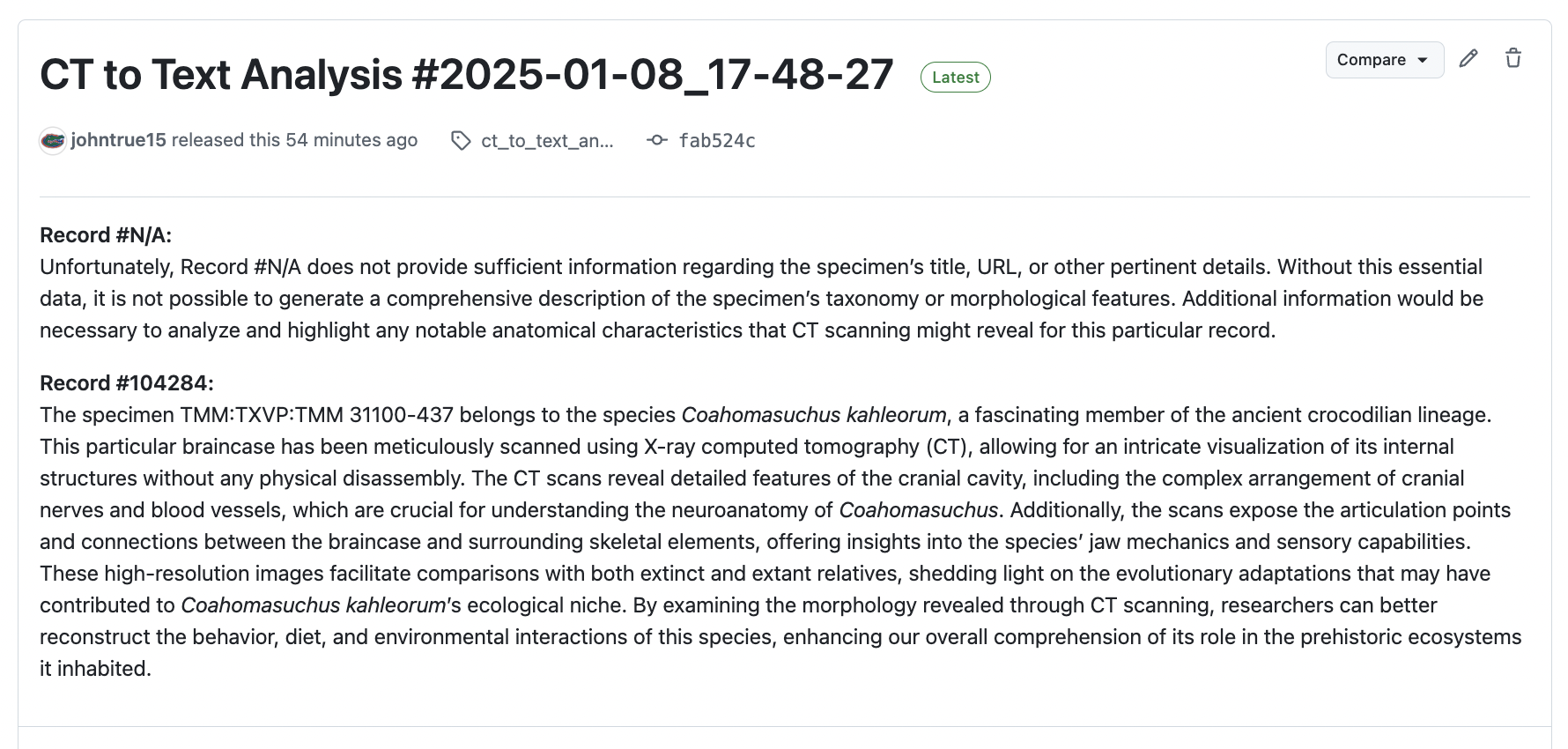
In the screenshot above, you can see two exemplary entries:
-
Record #N/A – Here, minimal metadata was provided for the record, meaning the summary tool wasn’t able to generate an in-depth description. This highlights how crucial it is to include detailed specimen information to fully leverage CT scanning insights.
-
Record #104284 – A complete record showcasing a Coahomasuchus kahleorum specimen. This example demonstrates how our pipeline describes a cranial structure, discussing the significance of CT images in revealing neuroanatomical details, jaw mechanics, and potential evolutionary adaptations.
Why This Matters
CT scanning provides a non-invasive glimpse into internal structures, helping researchers understand how ancient or modern organisms might have functioned and evolved. These auto-generated summaries:
- Aid quick comprehension for peers accessing new data
- Summarize morphological features and evolutionary insights without needing specialized parsing tools
- Offer a consistent narrative structure, making large data sets more approachable for a broad range of scientific audiences
Explore the Full Release
You can find the complete text and further details at the link below:
CT to Text Analysis #2025-01-08_17-48-27
Feel free to explore the release, and consider how a similar workflow could enhance your own repository’s data publication process. From quick overviews to deeper morphological insights, the CT to Text pipeline is designed to streamline knowledge transfer from raw data to curated summary.
← Previous Post $~~~~~~~~~~~$ Next Post →